

Plant maintenance workflow 2026: Iowa biophilic care guide
Maintaining vibrant indoor plants in Iowa’s biophilic spaces presents unique challenges for facility managers and interior designers who want thriving greenery year-round. Between fluctuating humidity, seasonal light shifts, and busy schedules, even well-intentioned plant programs can falter without a clear maintenance workflow. This guide delivers a practical, step-by-step system tailored for 2026, helping you sustain healthy plants in residential and commercial environments while maximizing productivity, air quality, and aesthetic impact. You’ll learn daily to seasonal care routines, troubleshooting tactics, and emerging tools like AI monitoring to keep your spaces alive and intentional.
Table of Contents
- Preparing For Effective Plant Maintenance In Biophilic Spaces
- Executing The 2026 Plant Maintenance Workflow Step-By-Step
- Troubleshooting And Common Mistakes In Plant Maintenance Workflows
- Expected Results And Benefits From A Well-Maintained Plant Workflow In 2026
- Explore Innovative Plant Systems To Enhance Your Biophilic Spaces
Key takeaways
| Point | Details |
|---|---|
| Structured workflow | Daily visual checks, weekly watering, monthly fertilizing, and seasonal adjustments ensure consistent plant health. |
| Productivity boost | Plant-enriched workplaces show a 15% productivity increase and measurable air purification benefits. |
| AI monitoring tools | Emerging sensors track moisture, light, and health metrics to optimize care timing and reduce manual effort. |
| Phytoremediation plants | Species like Cordyline fruticosa remove up to 87.5% of VOCs, enhancing indoor air quality. |
| Iowa-specific needs | Seasonal light and humidity shifts require adaptive watering and rotation schedules for Midwest climates. |
Preparing for effective plant maintenance in biophilic spaces
Before launching a maintenance workflow, gather essential tools and understand your plant inventory. You’ll need watering cans with long spouts for precision, moisture meters to avoid guesswork, sharp pruning shears for clean cuts, balanced liquid fertilizers, and microfiber cloths for dusting leaves. Facility managers in Iowa often work with pothos, snake plants, peace lilies, and dracaenas, species chosen for low light tolerance and air purification. Knowing each plant’s water, light, and nutrient needs prevents generic care mistakes that harm sensitive varieties.
Understanding biophilic design basics helps you position plants where they’ll thrive and deliver maximum wellness impact. Place high-light lovers near south-facing windows and shade-tolerant species in interior zones. Research shows the core plant maintenance workflow involves daily visual checks, weekly watering, monthly fertilizing and seasonal adjustments, a rhythm that balances attention with efficiency. This cadence prevents neglect while avoiding the over-care that stresses plants.
Typical maintenance durations vary by task and space size. The table below summarizes benchmarks from commercial and residential programs:
| Task | Frequency | Duration per 10 plants |
|---|---|---|
| Visual inspection | Daily | 5 minutes |
| Watering and moisture check | Weekly | 20 minutes |
| Pruning and dusting | Weekly | 15 minutes |
| Fertilizing | Monthly | 10 minutes |
| Pest inspection | Monthly | 10 minutes |
| Repotting and rotation | Seasonal | 30 minutes |
Pro Tip: Schedule weekly and monthly checks on the same day each cycle, like Monday mornings for watering and the first Friday for fertilizing. This routine builds muscle memory and prevents tasks from slipping through cracks during busy periods.
Stocking a dedicated maintenance cart with all tools keeps you mobile and efficient across multiple zones. Label fertilizers and pest treatments clearly, and store them away from high-traffic areas. For designers managing client spaces, a checklist app or simple spreadsheet tracks which plants received care and when, ensuring accountability and continuity even when team members rotate.
Executing the 2026 plant maintenance workflow step-by-step
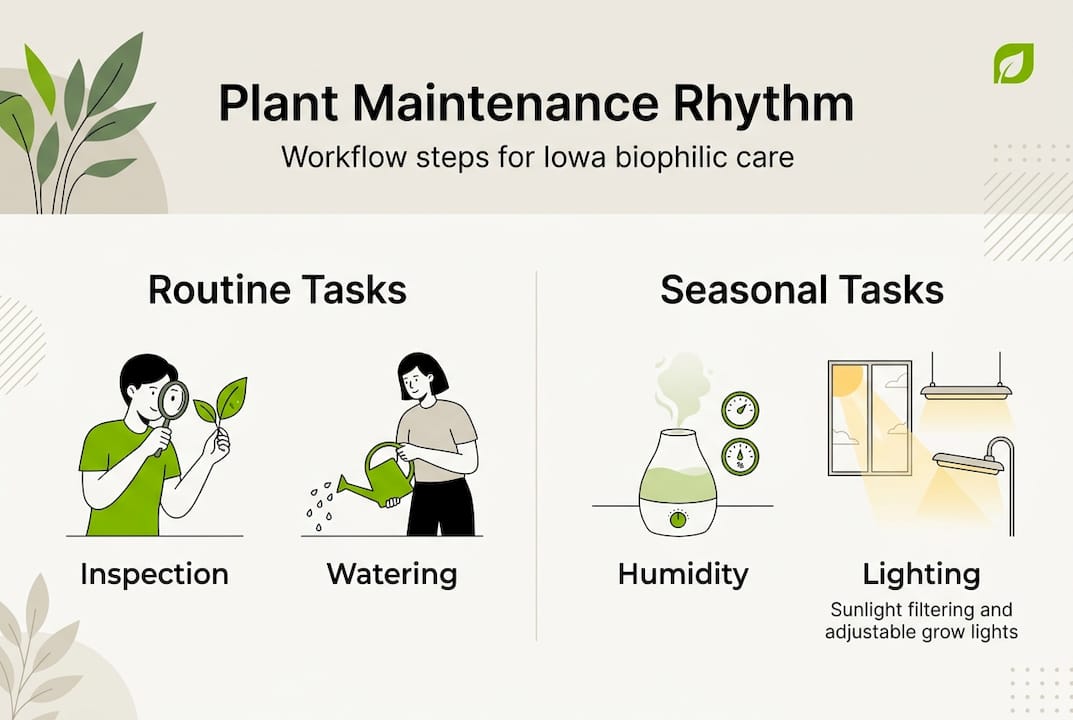
A successful workflow breaks down into daily, weekly, monthly, and seasonal actions. Each layer builds on the last, creating a safety net that catches issues early and sustains long-term plant health. Start with daily visual inspections, a quick walk-through where you scan for obvious distress signals like wilting, yellowing, or pest activity. This takes five minutes but prevents small problems from escalating into plant loss.
Weekly tasks include moisture checks, watering, pruning, and dusting. Use your moisture meter to test soil two inches below the surface. If it reads dry, water thoroughly until excess drains from the bottom, then empty saucers to prevent root rot. Prune dead or yellowing leaves with clean shears, cutting at the base to encourage new growth. Dust leaves with a damp microfiber cloth, removing the film that blocks light and reduces photosynthesis. Studies confirm 15% productivity increase in plant-enriched workplaces and proven air purification by common houseplants, benefits that multiply when foliage stays clean and healthy.
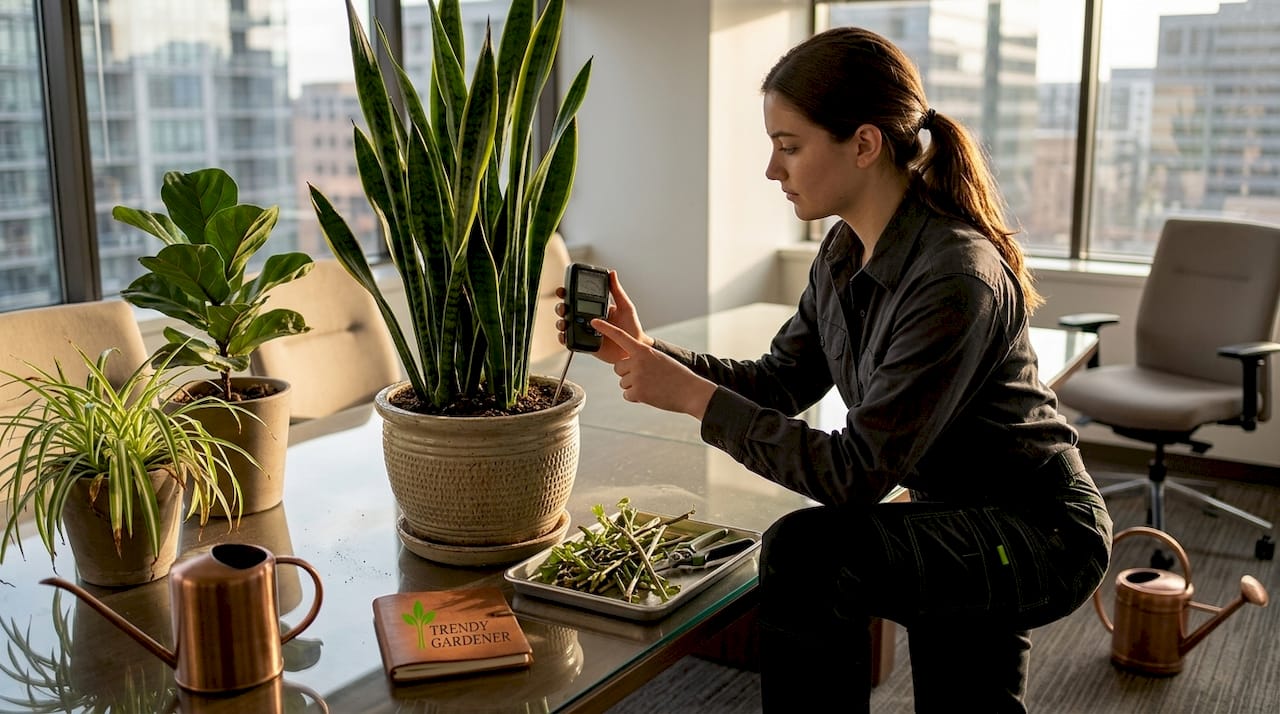
Monthly actions deepen care. Fertilize with a balanced liquid formula diluted to half strength, applying during the growing season from March through September. Inspect plants closely for pests like spider mites, aphids, or fungus gnats, checking undersides of leaves and soil surfaces. Rotate pots a quarter turn to ensure even light exposure, preventing lopsided growth. For spaces with indoor plants productivity role, this rotation also refreshes visual interest and prevents employees from tuning out static arrangements.
Seasonal tasks address Iowa’s shifting light and humidity. In fall and winter, reduce watering frequency as growth slows and indoor heating lowers humidity. Move plants closer to windows to compensate for shorter days, or supplement with grow lights. In spring, repot rootbound plants into containers one size larger with fresh potting mix. Summer heat may require more frequent watering, especially for plants near windows or HVAC vents. Adjust your schedule based on real-time observations, not rigid calendars.
Pro Tip: Incorporate automated watering systems like self-watering pots or drip irrigation for large installations. These tools maintain consistent moisture levels, reducing manual labor and minimizing human error. Pair them with weekly visual checks to catch mechanical failures or clogged lines before plants suffer.
Document each task in a maintenance log, noting dates, observations, and actions taken. This record helps you spot patterns, like a plant that consistently needs more water or a zone with persistent pest pressure. Over time, you’ll refine your workflow to match your specific environment, making care faster and more intuitive.
Troubleshooting and common mistakes in plant maintenance workflows
Even experienced facility managers make errors that compromise plant health. Overwatering tops the list, killing more houseplants than any other mistake. Roots need oxygen, and waterlogged soil suffocates them, leading to rot and fungal disease. Always check moisture before watering, and choose pots with drainage holes. If a plant sits in standing water, root damage may already be underway.
Neglecting pruning and dusting creates a slow decline. Dead leaves harbor pests and disease, while dusty foliage reduces photosynthesis and aesthetic appeal. Weekly grooming keeps plants looking sharp and functioning at full capacity. Ignoring pest presence allows infestations to spread across your entire collection. Quarantine new plants for two weeks before introducing them to established spaces, and treat any pest sightings immediately with insecticidal soap or neem oil.
Signs of poor plant health include yellowing leaves, drooping stems, brown leaf tips, stunted growth, and visible insects or webbing. Yellowing often signals overwatering or nutrient deficiency, while brown tips indicate low humidity or salt buildup from tap water. Drooping suggests underwatering or root damage. Catching these symptoms early allows you to adjust care before plants decline beyond recovery.
Choosing phytoremediation plants enhances air quality and reduces maintenance stress. Research shows Cordyline fruticosa remove up to 87.5% VOCs, making them ideal for Iowa offices and homes with new furnishings or carpeting. Syngonium podophyllum and other high-performing species combine air purification with low-maintenance needs, perfect for busy facilities. Integrating these plants into your ongoing plant care biophilic impact strategy delivers measurable wellness benefits without adding complexity.
Critical note: Overwatering and phytotoxicity from excessive fertilizer are the two most preventable causes of plant failure in commercial biophilic installations. Always err on the side of less water and diluted nutrients, adjusting upward only when plants show clear signs of need.
Another mistake is ignoring seasonal light changes. Iowa’s winter sun sits lower and weaker, so plants near windows in summer may need repositioning or supplemental light in colder months. Monitor your spaces throughout the year and adapt placement to maintain consistent light levels. Flexibility in your workflow prevents the rigidity that leads to plant stress.
Expected results and benefits from a well-maintained plant workflow in 2026
Following a structured maintenance workflow delivers tangible benefits across productivity, wellness, and sustainability. The table below compares outcomes from well-maintained biophilic spaces versus neglected installations:
| Benefit | Well-Maintained Workflow | Neglected Workflow |
|---|---|---|
| Productivity | 15% increase in employee output | No measurable change or decline |
| Air quality | Up to 87.5% VOC reduction | Minimal air purification |
| Aesthetics | Lush, vibrant, professional appearance | Sparse, unhealthy, unappealing |
| Sustainability | Long plant lifespan, reduced replacement costs | Frequent plant loss, higher expenses |
| Employee wellness | Lower stress, improved mood and focus | No wellness impact |
These outcomes stem from consistent care that keeps plants functioning at peak capacity. Healthy foliage maximizes photosynthesis and transpiration, the processes that clean air and regulate humidity. Vibrant plants create visual interest and psychological comfort, reducing workplace stress and improving focus. For residential clients, thriving greenery elevates home aesthetics and reinforces a commitment to sustainable living.
Long-term impacts extend beyond immediate health benefits:
- Reduced replacement costs as plants live longer and require fewer interventions
- Enhanced brand reputation for commercial spaces that prioritize employee wellness
- Improved client satisfaction for designers who deliver consistently beautiful, low-maintenance installations
- Measurable ROI from productivity gains and reduced sick days in plant-enriched offices
- Alignment with 2026 sustainability goals and green building certifications
Biophilic design trends in 2026 emphasize full-space integration and AI monitoring to sustain low-maintenance, efficient plant systems. AI sensors track soil moisture, light levels, and leaf health, sending alerts when intervention is needed. These tools reduce guesswork and free up time for higher-value tasks like design refinement and client consultation. Pairing traditional workflows with smart technology creates a hybrid approach that balances human expertise with data-driven precision.
Pro Tip: Leverage AI monitoring tools to optimize plant care for sustained results. Install sensors in high-value or hard-to-reach zones, using the data to fine-tune watering schedules and light placement. This investment pays off through reduced plant loss and more predictable maintenance budgets.
For Iowa facilities, the combination of structured workflows and emerging technology positions you to meet rising client expectations for beautiful, functional biophilic spaces. Staying current with indoor plant trends 2026 ensures your maintenance practices align with industry best practices and design innovations. The result is spaces that feel intentional, alive, and effortlessly maintained.
Explore innovative plant systems to enhance your biophilic spaces
Ready to elevate your plant maintenance workflow with solutions designed for efficiency and impact? Trendy Gardener offers innovative living wall systems that simplify care while delivering stunning visual results. Our 24 pocket wall mounted living wall system provides modular flexibility, allowing you to customize plant arrangements and access individual pockets for watering and pruning without disrupting the entire installation.
For larger commercial spaces, the recirculating living wall system automates irrigation, reducing manual labor and ensuring consistent moisture distribution. These systems integrate seamlessly with the 2026 plant maintenance workflow outlined in this guide, combining structured care routines with smart design. Explore our full range of biophilic solutions at Trendy Gardener and discover how intentional plant systems transform Iowa spaces into thriving, low-maintenance environments.
FAQ
How often should I water indoor plants in commercial biophilic spaces?
Water weekly or when soil feels dry two inches below the surface. Moisture meters eliminate guesswork and prevent overwatering, the leading cause of plant failure. Adjust frequency seasonally, as Iowa’s winter heating and summer heat alter evaporation rates. Frequent visual and moisture checks help you fine-tune watering schedules to match your specific environment and plant mix.
What are common signs of poor plant health to watch for?
Yellowing leaves, drooping stems, brown leaf tips, stunted growth, and visible pests are warning signs of stress or disease. Yellowing often indicates overwatering or nutrient deficiency, while drooping suggests underwatering or root damage. Early detection through daily visual inspections allows prompt intervention, saving plants before decline becomes irreversible.
Can AI technology assist with plant maintenance workflow?
Yes, AI sensors monitor soil moisture, light levels, and leaf health metrics to optimize care timing. These tools send alerts when plants need water or relocation, reducing manual workload and improving survival rates. Pairing AI monitoring with traditional visual checks creates a hybrid approach that balances data precision with human expertise, ideal for busy facility managers overseeing large installations.
Which plants best improve indoor air quality in Iowa biophilic spaces?
Cordyline fruticosa and Syngonium podophyllum are top performers, with studies showing they remove up to 87.5% and 81.69% of VOCs respectively. Including these phytoremediation species enhances health and sustainability of biophilic interiors, especially in spaces with new furnishings or carpeting that off-gas volatile organic compounds. Combine them with low-maintenance varieties like pothos and snake plants for a balanced, high-performing plant program.