

Plant Maintenance Essentials: Boost Tenant Satisfaction
Commercial property managers across Greater Des Moines know that keeping indoor plants healthy is not just an afterthought. Well-maintained greenery boosts tenant satisfaction and elevates the property’s professional image. The APPA highlights that maintenance means more than survival—it is about keeping plants in excellent condition for lasting visual and functional impact. Discover proven strategies to establish a reliable plant care system that meets both aesthetic demands and sustainability goals.
Table of Contents
- Defining Plant Maintenance In Commercial Spaces
- Types Of Interior Greenery And Needs
- Core Elements Of Plant Health And Care
- Troubleshooting Common Plant Issues
- Roles, Costs, And Choosing Vendors
Key Takeaways
| Point | Details |
|---|---|
| Comprehensive Care | Plant maintenance in commercial spaces requires systematic strategies that focus on health, aesthetics, and functionality, beyond basic care. |
| Diverse Needs | Different types of interior plants have unique maintenance requirements, necessitating tailored care protocols for optimal health. |
| Health Monitoring | Regular health assessments and proactive strategies are essential for early detection of potential issues, ensuring vibrancy and longevity of plants. |
| Vendor Selection | Choosing a plant maintenance vendor involves evaluating technical expertise and reliability, focusing on long-term value rather than just cost. |
Defining Plant Maintenance in Commercial Spaces
Plant maintenance in commercial settings is more than sporadic care - it’s a strategic approach to preserving the health, appearance, and functionality of indoor greenery. Preventive maintenance strategies ensure that plants remain vibrant assets rather than becoming potential liabilities.
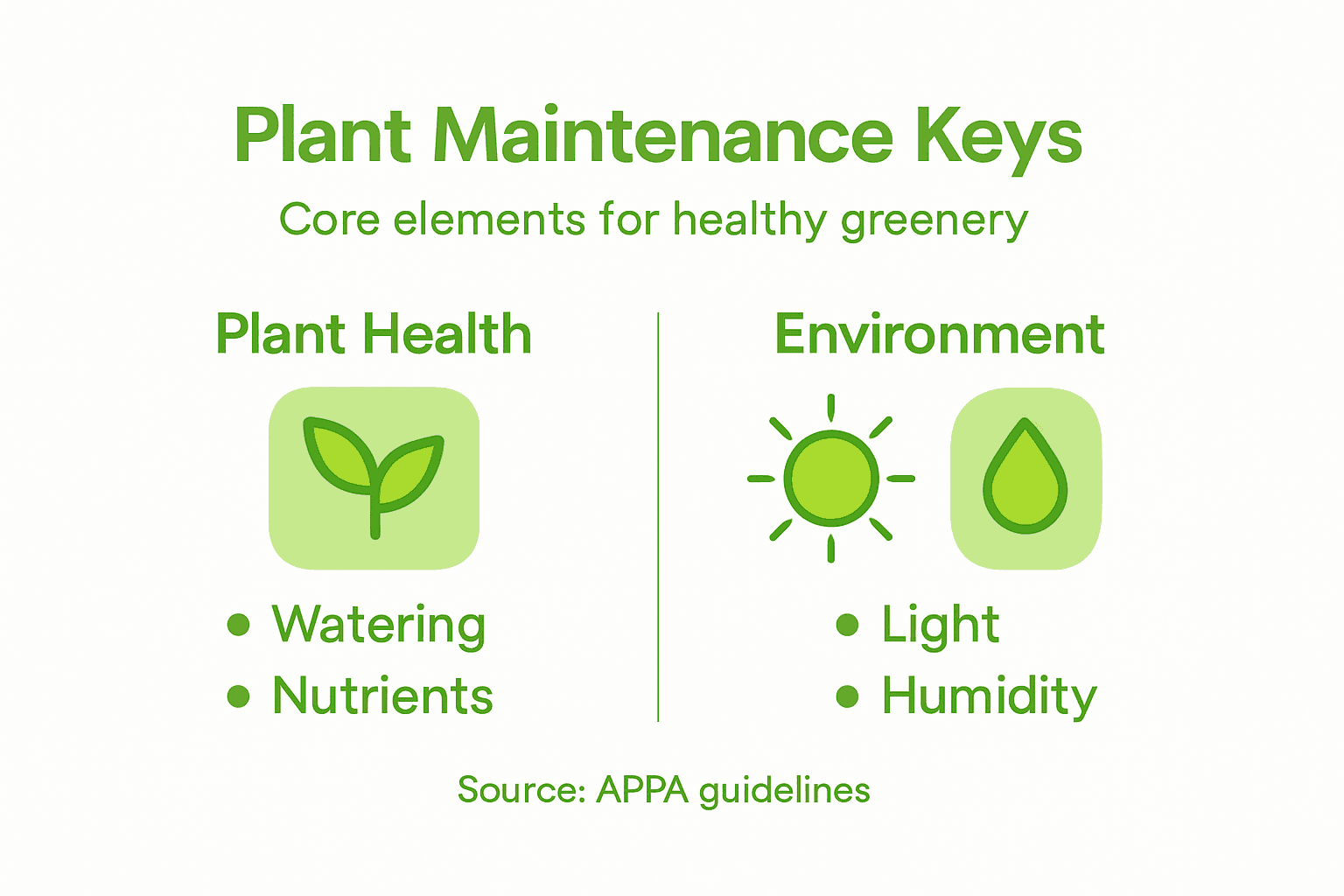
At its core, commercial plant maintenance involves systematic, proactive care designed to keep indoor plants healthy, attractive, and aligned with the aesthetic and environmental goals of the workspace. This goes beyond simple watering and occasional pruning - it’s a comprehensive approach that considers plant species, environmental conditions, lighting, humidity, and ongoing health monitoring.
Effective plant maintenance in commercial spaces typically includes several key components:
- Regular health assessments to identify potential issues early
- Precise watering schedules tailored to specific plant varieties
- Controlled environmental management (temperature, humidity, light exposure)
- Periodic pruning and grooming to maintain professional appearance
- Pest and disease prevention strategies
- Seasonal adaptation and care protocols
The Association of Physical Plant Administrators (APPA) emphasizes that maintenance isn’t just about keeping plants alive - it’s about maintaining an excellent condition that enhances workplace environments. Commercial plant maintenance.pdf) represents a holistic approach that balances aesthetic appeal with plant health and organizational efficiency.
Pro tip: Develop a standardized plant maintenance checklist that can be consistently applied across different commercial spaces to ensure uniform care and quality.
Types of Interior Greenery and Needs
Understanding the diverse world of interior greenery requires recognizing that each plant type brings unique characteristics and maintenance requirements to commercial spaces. Plant species identification is crucial for creating thriving indoor environments that look professional and support tenant well-being.
Commercial interior greenery can be broadly categorized into several distinct groups, each with specific environmental needs and aesthetic contributions:
- Tropical plants: Large-leafed, dramatic species like fiddle leaf figs and monstera
- Succulent varieties: Low-maintenance options perfect for minimalist designs
- Hanging plants: Trailing species that add vertical dimension to spaces
- Flowering indoor plants: Adds color and visual interest
- Architectural plants: Structured, sculptural varieties that make bold statements
Each plant type demands specialized care protocols. Ornamental plant maintenance involves understanding specific requirements like light exposure, humidity levels, watering frequency, and potential pest vulnerabilities. Commercial spaces must consider not just aesthetic appeal, but also the practical maintenance demands of their chosen greenery.
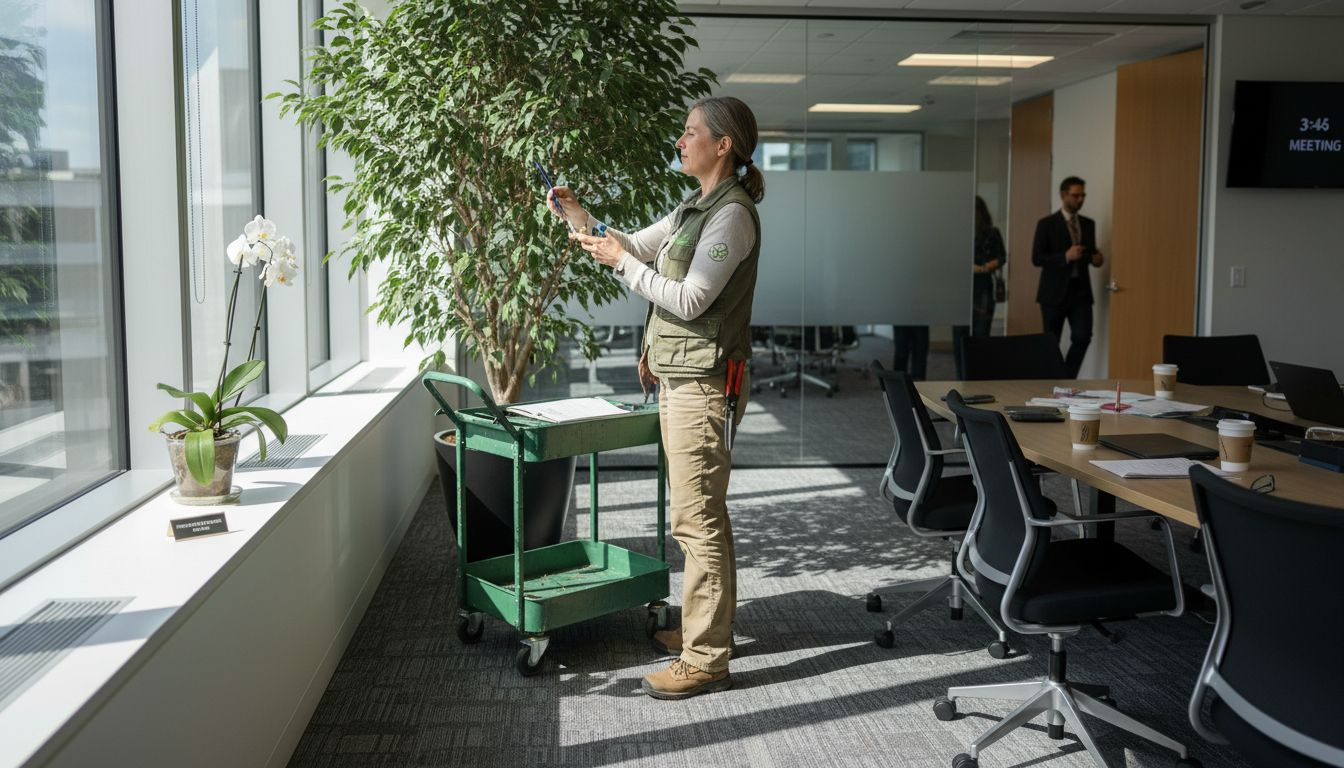
The selection process involves balancing visual impact, maintenance complexity, and environmental adaptation. Factors like natural light availability, temperature consistency, and humidity levels dramatically influence plant health and longevity in commercial settings.
Here is a summary of interior plant categories and their maintenance challenges:
| Plant Category | Maintenance Complexity | Visual Impact | Typical Environmental Needs |
|---|---|---|---|
| Tropical Plants | High | Dramatic, lush | Warm, humid, bright light |
| Succulent Varieties | Low | Minimalist, clean | Dry, indirect light |
| Hanging Plants | Moderate | Vertical interest | Moderate humidity, airflow |
| Flowering Indoor | Moderate | Colorful, lively | Variable light, regular feed |
| Architectural Plants | High | Structured, bold | Stable climate, bright light |
Pro tip: Create a detailed plant inventory documenting each species’ specific care requirements to streamline maintenance and ensure consistent, professional plant management.
Core Elements of Plant Health and Care
Plant health is a complex ecosystem of interconnected biological needs that extend far beyond simple watering and occasional pruning. Essential plant nutrients form the foundation of robust indoor greenery, determining whether plants merely survive or truly thrive in commercial environments.
The core elements of plant health can be categorized into several critical components:
- Nutrient management: Balanced supply of macro and micronutrients
- Hydration strategies: Precise water quantity and frequency
- Light exposure: Appropriate intensity and duration
- Temperature control: Consistent environmental conditions
- Soil health: Proper pH levels and organic composition
- Pest prevention: Regular monitoring and intervention
Nutrient availability fundamentals demonstrate that plants require a delicate balance of primary nutrients like nitrogen, phosphorus, and potassium, alongside secondary nutrients such as calcium and magnesium. Over- or under-fertilization can dramatically compromise plant vigor, making precise nutritional management crucial for commercial plant maintenance.
Understanding these interconnected health elements allows property managers to develop comprehensive plant care strategies that go beyond surface-level maintenance. Each plant species has unique requirements, necessitating a nuanced approach that considers individual characteristics and environmental interactions.
Pro tip: Develop a standardized plant health assessment checklist that tracks nutrient levels, hydration, and environmental conditions to create proactive maintenance protocols.
Troubleshooting Common Plant Issues
Effective plant maintenance requires a systematic approach to identifying and resolving potential health problems before they escalate. Plant problem diagnosis demands keen observation and understanding of the complex factors that can compromise plant vitality in commercial environments.
Common plant health issues typically fall into several critical categories:
- Pest infestations: Insect damage, mite colonies, fungal growth
- Nutrient deficiencies: Discoloration, stunted growth, leaf abnormalities
- Water stress: Overwatering, underwatering, root rot
- Environmental challenges: Light exposure problems, temperature fluctuations
- Disease symptoms: Fungal infections, bacterial growth, viral indicators
Arthropod damage detection requires careful examination of specific symptom patterns. Commercial plant managers must learn to recognize subtle signs like stippling, honeydew residue, or unusual leaf discoloration that indicate potential pest interventions.
Successful troubleshooting involves a holistic approach that considers the plant’s entire environmental context. This means examining not just the visible symptoms, but also investigating underlying factors such as recent maintenance changes, humidity levels, light exposure, and potential cross-contamination from nearby plants.
Pro tip: Create a detailed plant health monitoring log that tracks symptoms, environmental conditions, and intervention strategies to develop proactive maintenance protocols.
Roles, Costs, and Choosing Vendors
Navigating the complex landscape of plant maintenance vendor selection requires a strategic approach that balances cost-effectiveness with service quality. Maintenance cost considerations demand a nuanced understanding that goes beyond simple price comparisons.
Key roles and responsibilities in commercial plant maintenance typically include:
- Property Manager: Overall strategic oversight
- Plant Maintenance Specialist: Direct care and technical expertise
- Vendor Representative: Service delivery and consultation
- Facilities Coordinator: Integration with broader building management
- Quality Assurance Manager: Performance monitoring and compliance
Maintenance management framework emphasizes the importance of establishing clear service level agreements that outline precise expectations, responsibilities, and performance metrics. Successful vendor selection involves comprehensive evaluation across multiple dimensions, including technical capabilities, cost structures, reliability, and alignment with organizational objectives.
Cost analysis should extend beyond immediate pricing, considering long-term value, potential downtime risks, and the comprehensive quality of plant maintenance services. Commercial property managers must develop sophisticated vendor assessment strategies that prioritize consistent performance and proactive problem-solving over merely selecting the lowest-cost provider.
Compare vendor selection factors for commercial plant maintenance:
| Evaluation Aspect | Description | Long-Term Impact | Key Consideration |
|---|---|---|---|
| Technical Expertise | Skills and certifications | Fewer issues, optimal care | Verify proven experience |
| Responsiveness | Reaction time to needs | Timely problem resolution | Measure response benchmarks |
| Cost Structure | Pricing transparency | Predictable budgets | Assess hidden fees |
| Service Reliability | Consistency of delivery | Stable plant performance | Monitor past service records |
Pro tip: Develop a weighted vendor scorecard that objectively evaluates potential plant maintenance partners across technical expertise, responsiveness, cost-effectiveness, and proven track record.
Elevate Your Commercial Spaces with Expert Plant Maintenance Solutions
The article highlights the critical challenge of maintaining plant health through strategic, proactive care such as preventive maintenance strategies, precise nutrient management, and troubleshooting common plant issues. Many property managers struggle with balancing aesthetic impact and ongoing plant care demands, especially when aiming to boost tenant satisfaction with vibrant and thriving greenery. If maintaining consistent plant health and environmental harmony feels overwhelming, Trendy Gardener offers a comprehensive solution built around expert plant care and seamless maintenance programs.
Discover how our end-to-end services can transform your commercial interior greenery from a maintenance burden into a dynamic asset that elevates your workspace ambiance and supports tenant well-being. Whether you need bespoke living walls, custom plant styling, or reliable plant leasing and maintenance, Trendy Gardener delivers operational reliability with strong design direction. Don’t let plant health challenges affect your property’s image. Visit Trendy Gardener today and start your journey to effortlessly beautiful indoor plant environments with tailored care programs designed to keep your plants thriving year-round.
Frequently Asked Questions
What are the key components of effective commercial plant maintenance?
Effective commercial plant maintenance includes regular health assessments, precise watering schedules, controlled environmental management, periodic pruning, pest and disease prevention strategies, and seasonal adaptation protocols.
How can I identify what type of indoor plants are best suited for my commercial space?
Consider factors like natural light availability, temperature consistency, and humidity levels. Additionally, consult resources on plant species identification to understand the specific needs of each type of greenery.
What are common signs of plant health issues in commercial environments?
Common signs include discoloration of leaves, stunted growth, pest infestations (such as insect damage or fungal growth), and symptoms of water stress such as overwatering or underwatering that leads to root rot.
How do I choose a reliable vendor for plant maintenance services?
Assess vendors based on their technical expertise, responsiveness to needs, cost structure, and service reliability. Developing a weighted vendor scorecard can help evaluate potential partners more objectively.