

How plants enhance sustainable architecture in 2026
Most architects see plants as finishing touches, but research reveals they’re fundamental infrastructure in sustainable buildings. Biophilic architecture significantly enhances occupant wellbeing, reducing stress by 15% while improving cognitive performance by 25%. For homeowners, architects, and interior designers in Iowa seeking to integrate nature into their projects, understanding how plants contribute to both environmental performance and human health transforms design from good to exceptional.
Table of Contents
- Understanding The Role Of Plants In Sustainable Architecture
- How Plants Improve Environmental Sustainability And Building Performance
- The Miyawaki Method: Rapid, Native Forest Integration For Sustainable Design In Iowa
- Benefits Of Plants For Occupant Wellbeing And Productivity In Sustainable Architecture
- Implementing Plants Effectively In Sustainable Architectural Projects
- Explore Living Wall Systems For Sustainable Architecture
Key takeaways
| Point | Details |
|---|---|
| Wellbeing impact | Plants reduce stress hormones by 15% and boost cognitive performance by 25% in building occupants. |
| Environmental performance | Integrating plants improves energy efficiency, filters indoor air pollutants, and supports urban biodiversity. |
| Rapid ecosystem growth | The Miyawaki forest method creates mature native ecosystems in 20 to 30 years instead of centuries. |
| Productivity gains | Biophilic design increases office productivity by 15% and reduces employee turnover by 23%. |
| Implementation success | Effective plant integration requires strategic species selection, placement planning, and ongoing maintenance protocols. |
Understanding the role of plants in sustainable architecture
Biophilic architecture integrates natural elements into built environments to reconnect humans with nature. This isn’t decorative. It’s a systematic approach to building design that recognizes our evolutionary connection to living systems.
Biophilic architecture significantly enhances occupant wellbeing, delivering measurable physiological impacts. Studies document 15% reductions in stress hormones when people work in plant-rich spaces. Cognitive performance jumps 25% in environments with natural elements. Hospital patients surrounded by plants heal faster and require less pain medication.
The environmental performance benefits extend beyond human health. Plants in buildings contribute to energy savings through natural shading and temperature regulation. They support urban biodiversity by providing habitat corridors. Indoor plants filter volatile organic compounds and improve oxygen levels, addressing air quality challenges in sealed modern buildings.
Think of what is biophilic design as infrastructure rather than amenity. Just as electrical and plumbing systems serve essential functions, plant systems deliver critical environmental and psychological services. This shift in perspective changes how architects specify and maintain living elements.
“Our increasing separation from nature in urban environments creates physiological stress responses and cognitive challenges that biophilic design directly addresses.”
Key physiological impacts from plant integration include:
- Reduced cortisol levels and blood pressure in occupants
- Enhanced focus and memory retention in work environments
- Faster recovery times in healthcare settings
- Improved emotional regulation and mood stability
How plants improve environmental sustainability and building performance
Biophilic buildings enhance energy efficiency through multiple mechanisms. Strategic plant placement reduces cooling loads by up to 30% through natural shading. Living walls and green roofs provide insulation, cutting heating costs in winter. Automated systems coordinating plant shading with venetian blinds optimize daylight while minimizing solar heat gain.
Indoor air quality improves dramatically when plants become part of building systems. Plants filter indoor pollutants including formaldehyde, benzene, and trichloroethylene. A NASA study found certain species remove up to 87% of air toxins in 24 hours. This matters in Iowa where buildings stay sealed against temperature extremes most of the year.
The role of indoor plants extends to urban ecosystem services. Green roofs manage stormwater runoff, reducing strain on municipal systems during heavy rains. Plant-covered facades create microhabitats for pollinators and birds, supporting biodiversity even in dense urban areas. These aren’t minor benefits. They represent measurable contributions to city resilience.
| Metric | Buildings Without Plants | Buildings With Plant Integration |
|---|---|---|
| Annual cooling costs | Baseline | 25 to 30% reduction |
| Indoor VOC levels | Standard | 60 to 87% reduction |
| Stormwater runoff | 100% | 50 to 65% captured |
| Urban heat island effect | Full impact | 3 to 5°F temperature reduction |
Environmental benefits you can measure:
- Energy consumption drops through passive cooling and insulation
- Carbon sequestration increases with every square foot of plant coverage
- Air quality metrics improve within weeks of plant installation
- Biodiversity indices rise as plants create habitat networks
Pro Tip: Select native, drought-tolerant species adapted to Iowa’s climate zones to maximize ecological benefits while minimizing irrigation and maintenance requirements.
For architects planning long-term sustainable performance, plant care tips for architects help ensure systems deliver benefits for decades rather than months. Regular maintenance isn’t optional. It’s what separates functional green infrastructure from decorative elements that eventually fail.
The Miyawaki method: rapid, native forest integration for sustainable design in Iowa
The Miyawaki technique revolutionizes how we create native ecosystems in architectural landscapes. Instead of waiting centuries for forests to mature, this method produces dense, biodiverse woodland in 20 to 30 years.
The Andy Dahl Miyawaki forest at the University of Iowa demonstrates this approach locally. The project plants native species in dense concentrations that mimic natural forest structures. Trees grow 10 times faster than conventional reforestation and support 30 times more biodiversity.
Implementing a Miyawaki-style planting for your Iowa project:
- Survey existing native plant communities to identify appropriate species assemblages for your site.
- Prepare soil by mixing local topsoil with organic matter to replicate forest floor conditions.
- Plant seedlings at densities of three to five per square meter, far denser than traditional landscaping.
- Mix canopy trees, sub-canopy species, shrubs, and ground covers in natural proportions.
- Mulch heavily and water intensively for the first two to three years until the ecosystem self-sustains.
- Allow the system to develop without intervention once established, letting natural succession occur.
The benefits extend beyond rapid growth. Dense planting creates layered canopies that:
- Capture and filter stormwater more effectively than turf grass
- Sequester carbon at rates comparable to mature forests within a decade
- Provide year-round habitat for native birds, insects, and small mammals
- Reduce ambient temperatures through evapotranspiration and shade
Community collaboration makes Miyawaki projects work. The University of Iowa forest emerged from partnerships between landscape architects, ecologists, and student volunteers. This collaborative approach ensures proper species selection and maintenance protocols.
“Miyawaki forests demonstrate that we can rebuild complex native ecosystems within a human lifetime, making sustainable landscaping achievable at architectural scales.”
For ongoing success, plant maintenance essentials become critical after the initial establishment period. The goal is a self-sustaining system, but getting there requires informed care during the vulnerable early years.
Benefits of plants for occupant wellbeing and productivity in sustainable architecture
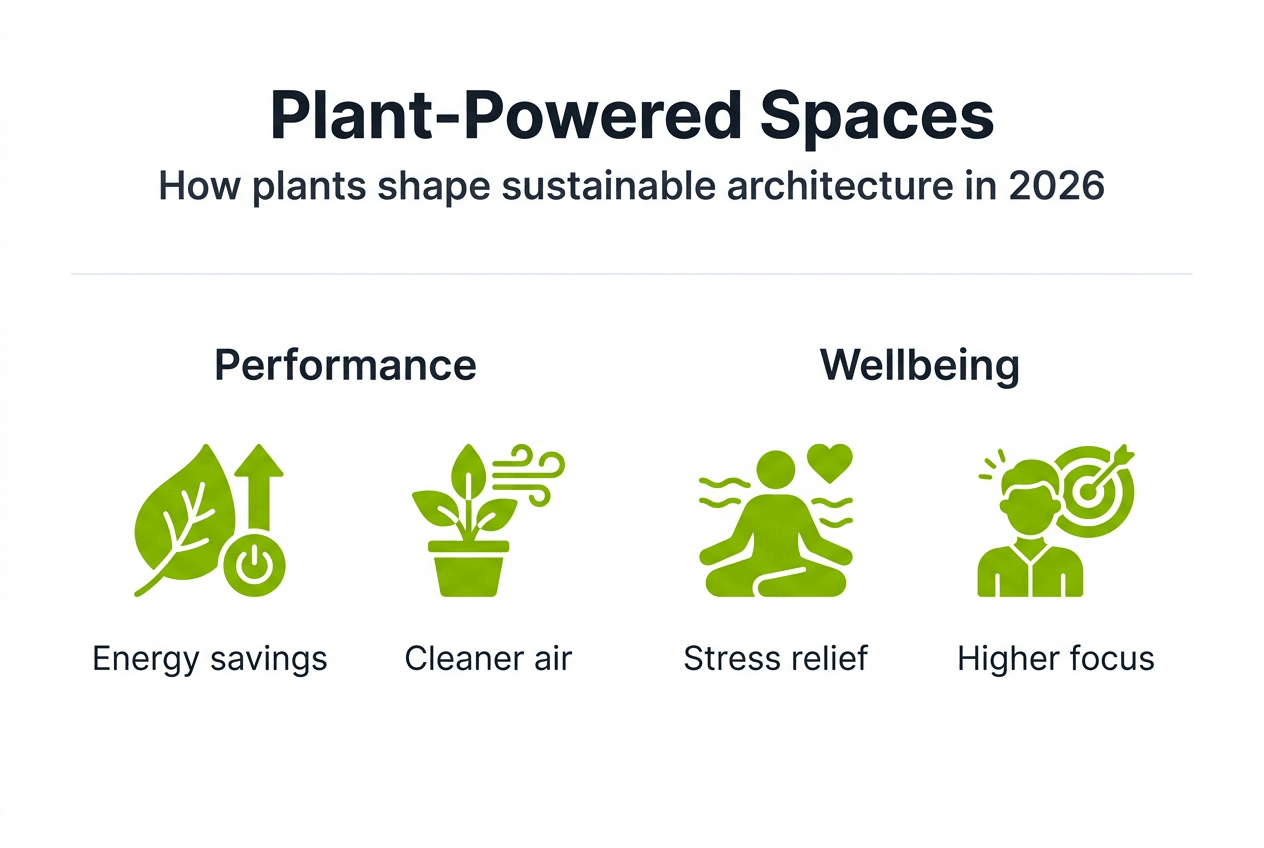
Biophilic design increases productivity by 15% while cutting employee turnover by 23%. These aren’t abstract quality of life improvements. They’re measurable returns on investment that transform how we value plants in commercial spaces.
| Metric | Traditional Office | Biophilic Office |
|---|---|---|
| Productivity rate | Baseline | 15% increase |
| Employee turnover | Baseline | 23% reduction |
| Sick days taken | Baseline | 10% decrease |
| Self-reported wellbeing | Baseline | 36% improvement |
Integrating plants reduces occupant stress markers through multiple pathways. Visual connection to nature lowers blood pressure within minutes. The presence of living organisms triggers unconscious relaxation responses. Even limited plant exposure improves emotional regulation throughout the workday.
Wellbeing benefits you can expect:
- Reduced anxiety and stress-related symptoms in building users
- Enhanced concentration and sustained attention spans
- Improved mood and emotional resilience
- Better sleep quality reported by occupants of plant-rich environments
Post-COVID workspace design makes biophilic elements essential rather than optional. Employees now prioritize healthy environments when choosing employers. Plants boost workspace wellbeing by signaling that an organization values occupant health.
The return on investment becomes clear when you calculate retention costs. Replacing an employee costs 50% to 200% of their annual salary. A 23% reduction in turnover pays for extensive plant installations within months. Add productivity gains and the financial case becomes overwhelming.
Pro Tip: Incorporate varied plant sizes and lighting conditions to optimize emotional impact, using tall specimens for visual drama and smaller plants for personal connection at desk level.
Architects and designers should consider how the role of plant care in offices affects long-term success. Healthy, thriving plants deliver benefits. Neglected, struggling specimens create negative associations. Maintenance planning matters as much as initial design.
For teams exploring how natural elements support performance, research on building high-performance teams shows environmental factors significantly influence collaboration and creativity. Plants create the psychological safety and cognitive clarity teams need to excel.
Implementing plants effectively in sustainable architectural projects
Successful plant integration depends on strategic decisions about species selection, placement, and maintenance. Random plant placement delivers random results. Systematic approaches create reliable, lasting benefits.
Steps for integrating plants into your Iowa architectural project:
- Conduct a site analysis identifying light levels, humidity patterns, temperature ranges, and existing conditions.
- Select species based on environmental requirements and Iowa climate adaptability, prioritizing natives when possible.
- Design irrigation systems appropriate to plant needs and building constraints, considering automation for consistency.
- Plan placement to maximize occupant interaction while supporting plant health through adequate light and airflow.
- Establish maintenance protocols with clear responsibilities and schedules before plants arrive.
- Monitor plant health weekly during establishment and monthly thereafter, adjusting care as needed.
Placement strategies that maximize benefits:
- Position plants where occupants spend the most time for maximum psychological impact
- Cluster groupings near windows to leverage natural light while creating visual focal points
- Use vertical installations where floor space is limited but wall area is available
- Incorporate plants at varying heights to create layered visual interest and microhabitat diversity
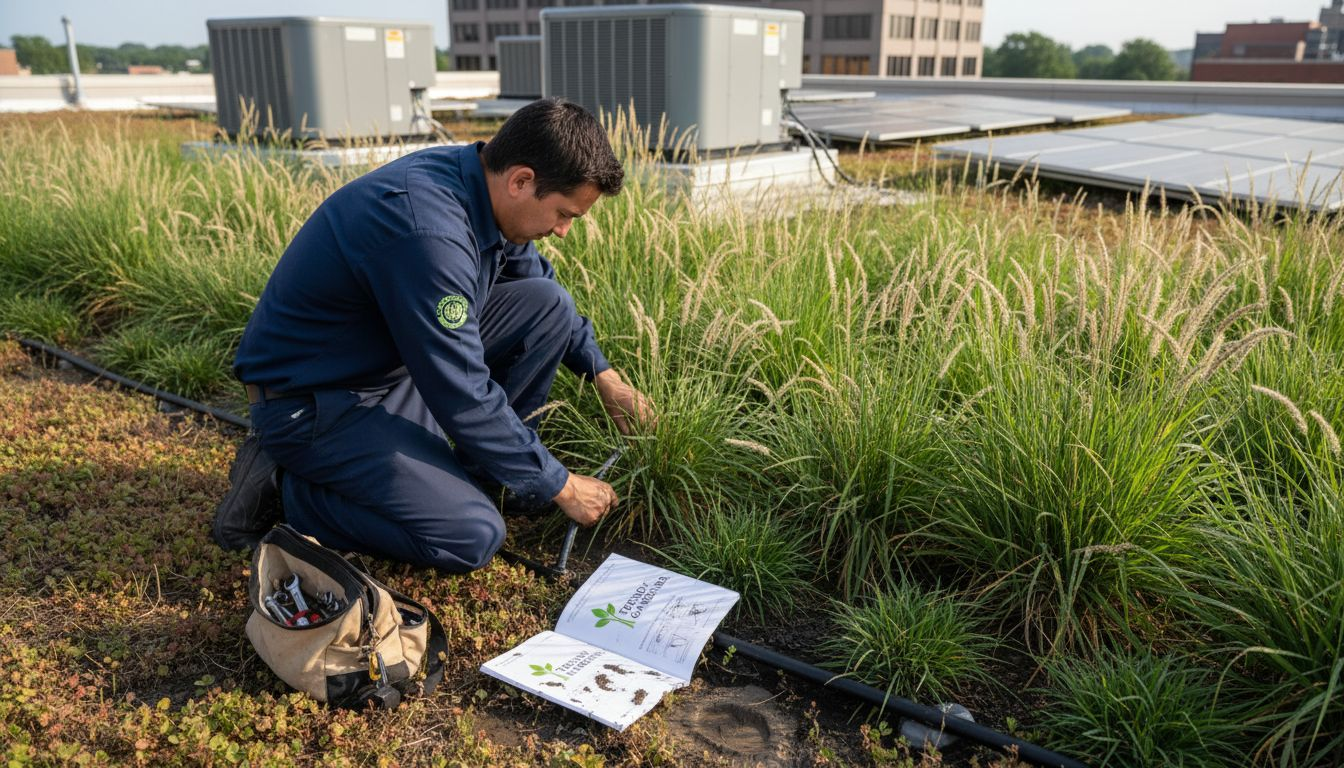
Pro Tip: Use native species like switchgrass, little bluestem, and native sedges for resilience in Iowa’s humid continental climate, reducing irrigation needs and maintenance costs year-round.
Maintenance planning prevents the slow decline that undermines biophilic design benefits. Ongoing plant care biophilic design isn’t about keeping plants barely alive. It’s about maintaining them at peak health so they deliver the environmental and psychological services you designed them to provide.
Collaboration between architects, landscape professionals, and building occupants during the design phase prevents conflicts later. Maintenance staff need to understand why plants matter and how to care for them. Occupants should know which plants they can interact with and which require distance. Building managers must allocate resources for ongoing care.
For architects new to specifying living systems, plant care tips for architects cover the fundamentals that prevent common failures. Understanding basic requirements helps you design installations that work with building systems rather than fighting them.
Explore living wall systems for sustainable architecture
Trendy Garden Club provides innovative living wall systems designed specifically for architects and homeowners integrating plants into sustainable buildings. Our 24 pocket wall mounted living wall system delivers immediate visual impact while improving indoor air quality from day one.
Living walls maximize biophilic benefits in limited space. Vertical installations provide plant coverage without consuming valuable floor area. Our recirculating living wall system includes integrated irrigation, eliminating the maintenance complexity that causes many plant installations to fail.
Easy installation and ongoing support ensure your biophilic design delivers lasting results. Trendy Gardener works with interior designers, architects, and builders throughout Iowa, providing consultation, installation, and maintenance services that keep living walls thriving for years. Transform your space sustainably with plant systems engineered for reliable performance and exceptional aesthetic impact.
Frequently asked questions about plants in sustainable architecture
How do plants reduce energy use in buildings?
Plants reduce energy consumption through natural shading that cuts cooling loads by up to 30% and insulation provided by living walls and green roofs. Strategic placement blocks solar heat gain in summer while reducing heat loss in winter, creating passive temperature regulation.
Which plants work best for Iowa’s climate in sustainable design?
Native species like switchgrass, little bluestem, prairie dropseed, and Iowa-adapted sedges thrive in humid continental conditions with minimal intervention. Indoors, pothos, snake plants, and ZZ plants tolerate variable light and humidity typical of Iowa buildings. Select plants matching your specific site conditions for best results.
What maintenance do living wall systems require to stay healthy?
Living walls need weekly watering checks, monthly fertilization, and quarterly pruning to maintain optimal appearance. Automated irrigation systems reduce labor requirements significantly. Professional plant maintenance essentials ensure systems stay healthy without overwhelming building staff.
Can biophilic design increase property value?
Research shows buildings with biophilic elements command rental premiums of 7% to 15% and sell faster than comparable properties without green features. Lower energy costs and higher tenant retention further enhance property values. The investment in quality plant systems typically returns positive ROI within three to five years.
How quickly can benefits of adding plants be noticed by occupants?
Psychological benefits appear within minutes of exposure to plants, with measurable reductions in stress hormones and blood pressure. Productivity improvements typically emerge within two to four weeks as cognitive benefits accumulate. Air quality improvements take four to eight weeks as plants establish and begin actively filtering pollutants.