

Corporate plant styling process guide for Iowa offices
Many corporate offices in Iowa face the same challenge: uninspiring, stressful environments that drain employee energy and morale. Yet biophilic design improves employee well-being and productivity with measurable results. This guide walks you through a practical, step-by-step corporate plant styling process tailored specifically for Iowa office spaces, helping you create a healthier, more engaging workplace.
Table of Contents
- Understanding The Benefits Of Corporate Plant Styling
- Preparation: Planning Your Corporate Plant Styling Project
- Execution: Step-By-Step Corporate Plant Styling Process
- Verification And Optimizing The Impact Of Your Plant Styling
- Enhance Your Iowa Office With Expert Plant Styling Solutions
Key takeaways
| Point | Details |
|---|---|
| Plants reduce stress | Office greenery lowers stress by 10% and boosts mood significantly. |
| Right plant selection matters | Choose species matching your light, humidity, and maintenance capacity. |
| Maintenance prevents failure | Regular care routines keep plants thriving and benefits sustained. |
| Measurable productivity gains | Proper plant integration delivers up to 15% productivity improvements. |
Understanding the benefits of corporate plant styling
Corporate plant styling isn’t just about aesthetics. Research demonstrates that plants boost attention, creativity, and productivity while reducing stress in office environments. When you integrate greenery thoughtfully, you’re investing in employee mental health and operational performance simultaneously.
The science backs this up convincingly. Employees working in spaces with visible plant presence report significantly lower stress levels and improved mood throughout their workday. The natural elements create psychological comfort that cubicle walls and fluorescent lighting simply cannot replicate.
Productivity gains are equally impressive. Studies tracking attention span and creative problem solving reveal marked improvements in plant rich environments. Your team members stay focused longer and generate more innovative solutions when surrounded by living greenery.
Air quality improvements add another layer of value. While plants alone won’t replace your HVAC system, balanced plant integration helps filter airborne particulates and regulate humidity naturally. This creates a more comfortable breathing environment that employees notice and appreciate.
Commercial spaces benefit from the role of plants in commercial spaces beyond employee wellness. Clients and visitors form more positive impressions when entering offices with thoughtful biophilic design. The investment signals care, professionalism, and attention to detail.
Key benefits you’ll see include:
- Reduced employee sick days from improved air quality
- Enhanced focus during complex cognitive tasks
- Lower turnover rates as workplace satisfaction increases
- Stronger first impressions with prospective clients and partners
“Physical and visual access to plants creates measurable improvements in occupant satisfaction and psychological well-being across diverse office settings.”
The cumulative effect transforms your office from a place people tolerate into a space where they genuinely want to spend time. That shift drives performance outcomes you can measure and sustain long term.
Preparation: planning your corporate plant styling project
Successful plant styling starts with thorough preparation, not impulsive purchasing. You need a clear understanding of your space’s conditions and realistic expectations about maintenance commitments before selecting a single plant.
Start by conducting a comprehensive environmental assessment. Walk through your office and document light levels in different areas throughout the day. Note which spaces receive direct sunlight, bright indirect light, or remain consistently dim. Measure humidity levels if possible, especially in Iowa’s variable climate where winter heating drastically reduces indoor moisture.
Space availability matters as much as environmental conditions. Identify floor space, desk surfaces, shelving, and potential vertical installations where plants could thrive without disrupting workflow. Consider traffic patterns to avoid placing plants where they’ll be bumped or knocked over repeatedly.
Budget planning requires honest evaluation of both initial and ongoing costs. Factor in plant purchases, containers, soil, installation labor, and recurring maintenance expenses. Many offices underestimate the true cost of keeping plants healthy long term, leading to disappointing results and wasted investment.
Plant selection criteria for Iowa offices:
- Tolerance for moderate to low indirect light
- Resilience to irregular watering schedules
- Minimal pest susceptibility
- Low maintenance pruning requirements
- Air purifying capabilities as a bonus
Pro Tip: Create a location mapping document with photos, light readings, and available space dimensions. This becomes your implementation blueprint and helps communicate your vision to team members or service providers.
Office plants tolerant of low to moderate indirect light achieve survival rates above 85% when paired with appropriate care protocols. Your planning phase should identify which species match each location’s specific conditions.
Consider these implementation factors:
| Factor | Considerations |
|---|---|
| Light zones | Map high, medium, and low light areas |
| Water access | Identify convenient water sources for maintenance |
| Aesthetic goals | Define style preferences (modern, tropical, minimalist) |
| Maintenance capacity | Assess internal resources versus outsourced care |
Your preparation phase sets the foundation for everything that follows. Rushing this step leads to poor plant choices, placement mistakes, and maintenance challenges that undermine your entire investment. Take the time to plan thoroughly before moving to execution.
Review office plantscaping tips 2026 and explore the best types of indoor plants for offices to refine your species selection based on real world performance data.
Execution: step-by-step corporate plant styling process
With your plan finalized, you’re ready to implement your corporate plant styling project systematically. Following these steps ensures consistent results and avoids the common pitfalls that derail less organized efforts.
Step 1: Select plant species matching conditions and style
Match each identified location with appropriate species based on your environmental assessment. For low light areas, choose ZZ plants, snake plants, or pothos. Brighter spaces can support fiddle leaf figs, rubber plants, or dracaenas. Don’t compromise on species suitability for aesthetic preferences, this leads to plant failure.
Step 2: Choose strategic placement for visual impact
Position plants where they’ll receive adequate light while maximizing visual presence. Entry areas, reception desks, and conference rooms benefit from statement plants that create immediate impressions. Individual workstations need smaller, non intrusive options that provide benefits without cluttering limited space.
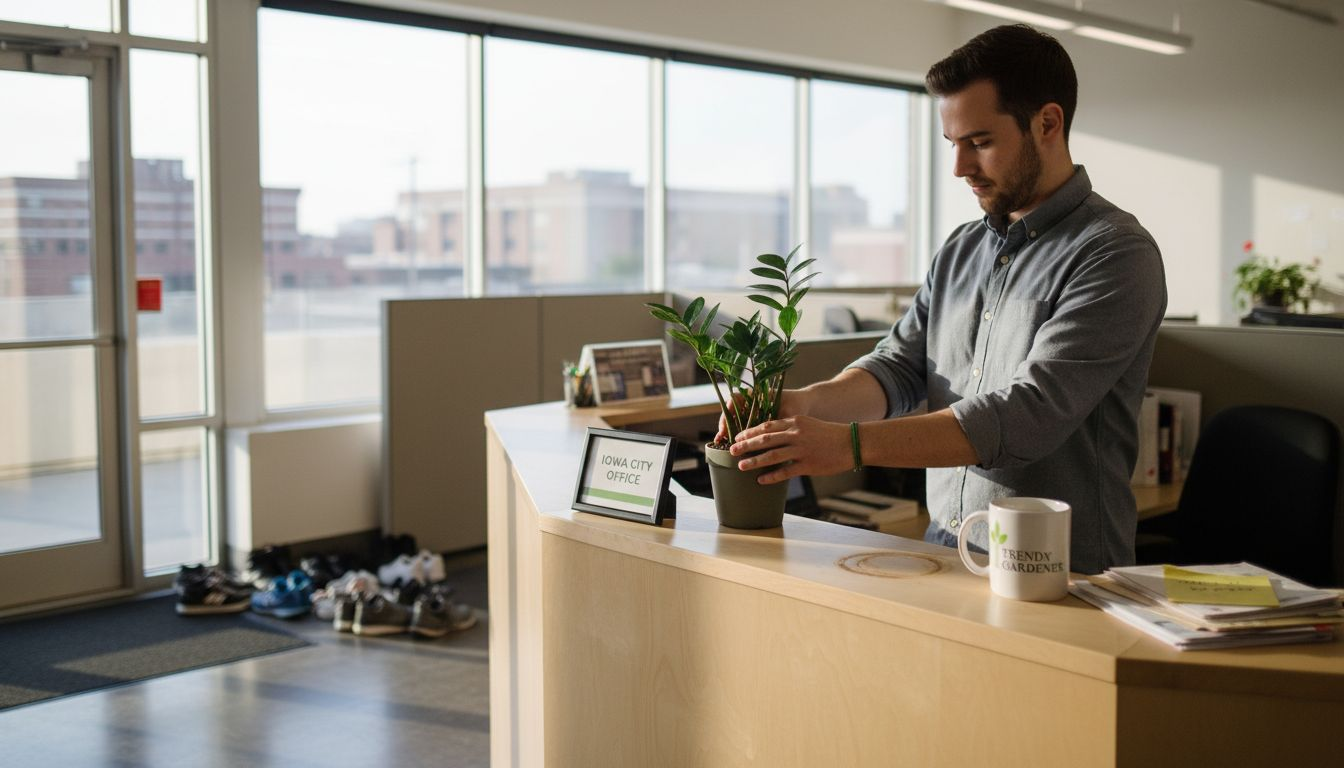
Consider sight lines from different angles. Plants should enhance views, not obstruct them. Vertical installations like living walls work brilliantly in spaces with limited floor area but plenty of wall real estate.
Step 3: Style using varied textures and colors
Create visual interest by mixing plant varieties with different leaf shapes, sizes, and colors. Combine broad leafed species with delicate, feathery options. Use varied container styles that complement your office aesthetic while maintaining cohesion.
Grouping plants in odd numbers (three or five) creates more dynamic visual arrangements than even numbers. Layer heights to add dimension, placing taller plants behind shorter ones.
Pro Tip: Invest in quality planters with proper drainage systems. Cheap containers without drainage holes cause root rot and plant death, wasting your entire styling investment.
Step 4: Establish maintenance schedules
Neglecting maintenance undermines even perfect plant selection. Create detailed care schedules specifying watering frequency, pruning needs, and pest inspection intervals for each plant type. Assign clear responsibility, whether to internal staff or an external service provider.
Common maintenance mistakes to avoid:
- Overwatering, which causes 78% of office plant failures
- Inconsistent watering schedules that stress plants
- Ignoring pest signs until infestations spread
- Skipping regular dusting that blocks light absorption
- Neglecting fertilization during growing seasons
Step 5: Monitor and adjust care protocols
Plant health indicators tell you when adjustments are needed. Yellowing leaves often signal overwatering or insufficient light. Brown leaf tips suggest low humidity or salt buildup from tap water. Leggy growth indicates inadequate light exposure.
Document plant responses to your care routine during the first three months. This data helps you refine watering frequency, fertilizer applications, and placement decisions based on actual performance rather than assumptions.
| Maintenance task | Frequency | Key points |
|---|---|---|
| Watering | Variable by species | Check soil moisture before watering |
| Dusting leaves | Biweekly | Use damp cloth on large leaves |
| Pest inspection | Weekly | Check undersides of leaves |
| Fertilizing | Monthly during growth | Use diluted liquid fertilizer |
| Pruning | As needed | Remove dead or damaged growth |
The office plant care guide provides detailed protocols for maintaining common office species throughout the year. Reference it when troubleshooting specific plant issues or optimizing your care routine.
Execution success depends on systematic implementation and consistent follow through. Plants that receive appropriate care from day one establish strong root systems and resilient growth patterns that sustain long term benefits.
Verification and optimizing the impact of your plant styling
Implementation is just the beginning. Verifying effectiveness and optimizing impact ensures your plant styling investment delivers sustained returns over time.
Employee feedback provides your most valuable success metrics. Conduct brief surveys before implementation and again at three and six month intervals. Ask specific questions about workspace satisfaction, stress levels, and perceived air quality improvements. The data reveals whether your plant styling achieves its intended wellness objectives.
Productivity tracking offers quantifiable verification. Compare metrics like task completion rates, meeting effectiveness scores, and project delivery timelines before and after plant integration. While multiple factors influence productivity, consistent improvements following plant styling implementation indicate genuine impact.
Physical plant health serves as another verification metric. Regular inspections reveal whether your care protocols adequately support plant vitality. Declining plant health signals maintenance gaps or environmental mismatches that need immediate correction.
Key verification indicators:
- Employee satisfaction scores trending upward
- Reduced absenteeism rates correlating with implementation
- Sustained plant growth and vibrant foliage color
- Minimal pest issues or plant replacements needed
- Positive visitor comments about office atmosphere
Occupants’ satisfaction improves with physical and visual access to plants in their work environment. Your verification process should confirm these satisfaction gains are materializing as expected.
“Continuous monitoring and refinement of plant placement and care protocols maximizes the long term wellness and productivity benefits of corporate plant styling investments.”
Troubleshooting common issues quickly prevents small problems from escalating. If specific plants consistently struggle despite proper care, they’re likely mismatched to their location’s conditions. Don’t hesitate to relocate or replace struggling specimens.
Seasonal adjustments keep your plant styling optimized year round. Iowa’s dramatic seasonal shifts affect indoor conditions significantly. Winter heating reduces humidity and may require more frequent watering or supplemental humidification. Summer conditions might necessitate less frequent watering as humidity increases.
Long term optimization strategies:
- Rotate plants seasonally to different locations for fresh visual impact
- Gradually expand your plant collection as maintenance confidence grows
- Experiment with new species that challenge your growing skills
- Refine container choices and styling arrangements based on feedback
The connection between plants, workspace wellbeing, and Iowa office productivity in 2026 continues evolving as more research emerges. Stay informed about new findings that could enhance your plant styling approach.
Verification isn’t a one time checkpoint. It’s an ongoing process that ensures your corporate plant styling continues delivering value as your office environment and employee needs evolve over time.
Enhance your Iowa office with expert plant styling solutions
Transforming your Iowa office through strategic plant styling delivers measurable benefits, but partnering with experienced professionals amplifies those results while minimizing your time investment and learning curve.
Trendy Gardener specializes in creating biophilic office environments that feel intentional, elevated, and alive from day one. Our end-to-end plant programs handle consultation, design concepting, sourcing, installation, and ongoing maintenance so your team can focus on core business operations while enjoying the wellness benefits of expertly styled greenery.
For offices with limited floor space but strong visual impact goals, our wall mounted living wall system transforms vertical surfaces into stunning green focal points. These systems deliver maximum aesthetic impact with minimal footprint, perfect for reception areas and conference rooms.
Larger installations benefit from our recirculating living wall system, which integrates automated irrigation for reduced maintenance demands while supporting diverse plant selections. These sophisticated systems create dramatic biophilic statements that employees and visitors remember long after leaving your space.
FAQ
What types of plants are best for Iowa office environments?
Ideal species include ZZ plants, snake plants, and pothos because they tolerate low indirect light and irregular watering. These resilient options achieve high survival rates in typical office conditions. They require minimal maintenance while delivering consistent air quality and aesthetic benefits that justify their modest investment cost. Explore the best types of indoor plants for offices for comprehensive species recommendations.
How can I avoid common maintenance mistakes with office plants?
Use the finger knuckle test to check soil moisture before watering, inserting your finger up to the second knuckle to feel dampness levels. Avoid overwatering, which causes 78% of failures. Establish consistent inspection routines that catch pest issues early before they spread throughout your collection. Regular pruning removes dead growth that drains plant energy and creates disease entry points. The office plant care guide details preventive maintenance protocols.
What impact does corporate plant styling have on employee productivity?
Improved air quality and natural aesthetics boost focus while reducing stress in measurable ways. Biophilic design with plants improves productivity by 15% and reduces stress by 10% according to controlled workplace studies. These gains compound over time as employees develop stronger connections to their enhanced work environment. Learn more about plants, workspace wellbeing, and Iowa office productivity in 2026.
How much should I budget for corporate plant styling?
Initial costs range from $50 to $200 per plant including container and installation, depending on species size and complexity. Monthly maintenance expenses typically run $30 to $75 per plant when outsourcing care professionally. Larger installations like living walls require higher upfront investment but lower per plant maintenance costs due to integrated systems. Budget realistically for both phases to ensure sustainable long term results rather than disappointing failures from underfunding.